Advertisement
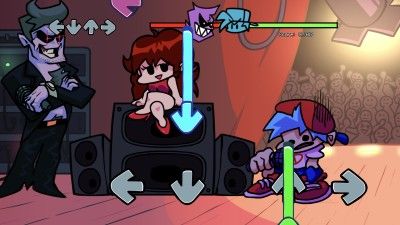
Friday Night Funkin' is a unique rhythm game that has won widespread popularity with its lighthearted and humorous storyline, retro pixel art, and challenging gameplay. The overall atmosphere is lighthearted and slightly playful, allowing players to experience an alternative musical duel at their fingertips, feeling the impact of the music and the fun of interacting with the characters.
The premise is simple and straightforward: the protagonist, "Boyfriend," seeks to win the affections of his girlfriend, "Girlfriend," but faces numerous obstacles from her father and other characters. To prove his skill, the protagonist must defeat various opponents in a series of musical battles. Each battle is like a unique "music competition." Accompanied by dynamic melodies, the protagonist must use precise rhythmic tapping to suppress the opponent and win. While the story is lighthearted and humorous, it gives the game a distinct personality and a constant driving force.
In terms of gameplay, Friday Night Funkin' uses a classic rhythm control system. Players must press the corresponding keys according to the direction arrows that scroll on the screen to make the protagonist sing the correct notes. As levels progress, the tempo accelerates and the notes become increasingly dense, testing the player's reflexes and sense of rhythm. While the controls may seem simple, the rapid combos and complex rhythmic combinations in the more challenging levels often leave players feeling flustered and extremely challenging.
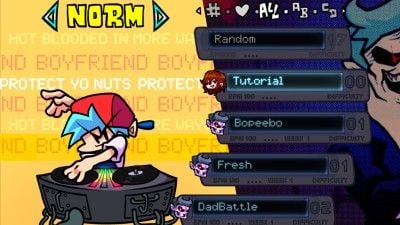
The game's music library is also a highlight. Each character has their own unique soundtrack, ranging from rock and hip-hop to electronic music, each vibrant and diverse. Music is more than just the background atmosphere; it's the soul of the battle. The melodies of each battle are closely linked to the character's personality and the plot, allowing players to engage in a genuine dialogue with the characters through the music. This "music is battle" setting makes each song unique and unforgettable.
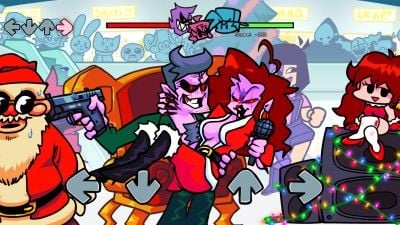
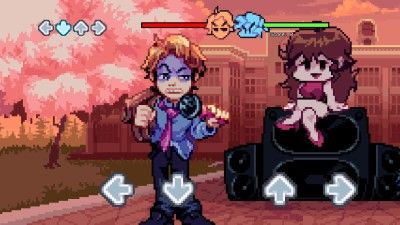
Beyond the core gameplay, the game also boasts a unique aesthetic and presentation. The retro pixel art style complements the exaggerated character designs, creating a sense of nostalgia and playfulness. The character movements, expressions, and stage effects are all incredibly dynamic, allowing players to focus on the controls while also enjoying visual entertainment. Especially during duels, the character's performance changes with the rhythm, greatly enhancing the sense of immersion.
Friday Night Funkin' features a cleverly designed difficulty level. New players can start with the easy mode and gradually become familiar with the rhythm and button presses, while experienced players can find the ultimate challenge in the higher difficulty levels. Some tracks feature extremely fast-paced rhythms, with arrows covering the screen almost instantly, requiring players to concentrate intensely to maintain combos. This "easy to learn, difficult to master" approach ensures enjoyment for players of all levels.
Furthermore, Friday Night Funkin''s open nature has spawned a wealth of community-generated content. Players enthusiastically design new characters, songs, and plots for the game, continuously expanding its gameplay and storyline. This open and creative atmosphere has made it more than just a game; it's a musical phenomenon co-created by players.
Overall, Friday Night Funkin' has captivated players worldwide with its unique music battle mode, rich song library, diverse characters, and humorous and lighthearted plot. It is both a challenging rhythm game and a captivating musical adventure. Whether you're a music lover, a rhythm game fan, or just looking for something to have fun, you can find something to enjoy in Friday Night Funkin'.
Advertisement

View on mobile
The core gameplay of Friday Night Funkin' is a "music rhythm battle." Players must accurately press the corresponding keys according to the rhythm arrows displayed on the screen, allowing the protagonist to complete their performance and engage in a tense and fun musical competition with their opponent.
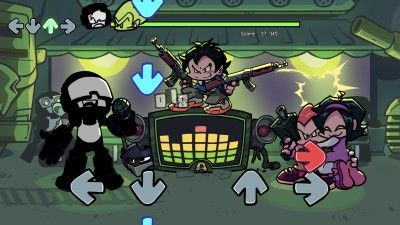
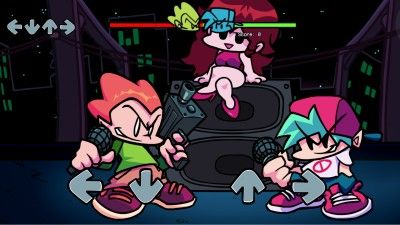
Upon entering the game, players will see scrolling directional arrows at the top of the screen, representing the notes in the rhythm. Below is a prompt area for player control. When the arrows on the top of the screen align with the corresponding position below, players must immediately press the correct key. Typically, the keys are located in four directions: up, down, left, and right, corresponding to different notes in the rhythm. Accurate key presses not only ensure a smooth flow of music but also enhance the character's expressiveness. Missing or pressing the wrong notes will result in errors in the protagonist's performance, affecting their overall performance.
The game uses a turn-based music battle format. Each song is typically divided into several measures, with the protagonist and opponent alternating between them. The opponent sings a melody, and the player then responds with the same melody. This mechanic makes the game feel like a true musical competition, with back-and-forth and a vibrant rhythm. As the difficulty increases, the rhythms of the opponent's performance become more complex, making the player's control increasingly tense and exciting. The essence of the gameplay lies in "rhythm and reaction speed." In Easy mode, the note rhythm is relaxed and the arrows appear less frequently, making it suitable for beginners to practice. In Hard mode, however, the arrows fall at an extremely fast speed and are arranged more densely, often requiring players to press multiple keys in a very short period of time. Some tracks even switch beats mid-tempo or suddenly accelerate at climaxes, greatly testing the player's hand speed and concentration.
The combo system is a crucial element of the gameplay. Each accurate note press increases the combo count, and continuous "perfect" presses result in higher scores and more dazzling special effects. Mistakes interrupt the combo, reducing the score. This combo mechanic not only encourages players to pursue precision, but also makes each challenge full of tension and a sense of accomplishment.
In addition to standard arrow control, some special levels feature unique rhythm combinations. For example, a rapid "left-right combo" requires players to switch back and forth in a very short period of time; or long-pressing the arrows simulates a sustained high-pitched singing. These variations add variety to the gameplay and avoid monotony. As players progress through new levels, they'll encounter new rhythmic challenges, keeping the experience fresh.
During battles, players' performance is displayed in real time on the screen as a "life bar." Frequent mistakes will gradually tilt the bar toward the opponent, ultimately leading to failure. Conversely, steady and accurate control will tilt the bar toward the protagonist, allowing them to successfully complete the level. This mechanic elevates the gameplay beyond just a score-based competition; it also imbues it with a competitive feel, creating a tense, on-the-spot atmosphere.
Friday Night Funkin' is generally easy to learn, but difficult to master. While the entry barrier is low, anyone can quickly grasp the button layout. However, maintaining combos and completing a complete song in challenging tracks requires a strong sense of rhythm and control stability. It's this gradual progression from easy to extreme challenges that keeps players engaged and finding joy in their constant attempts.
In summary, the game's gameplay blends rhythm control, music battles, and competitive elements. It challenges players' auditory reflexes and hand speed, while also offering the exhilarating feeling of pulling off combos. Every challenge is a new rhythm adventure, and every successful completion brings immense satisfaction. This simple yet profound gameplay is the enduring charm of Friday Night Funkin'.
Advertisement